9 DoF Box Detection

Oregon State University 2025

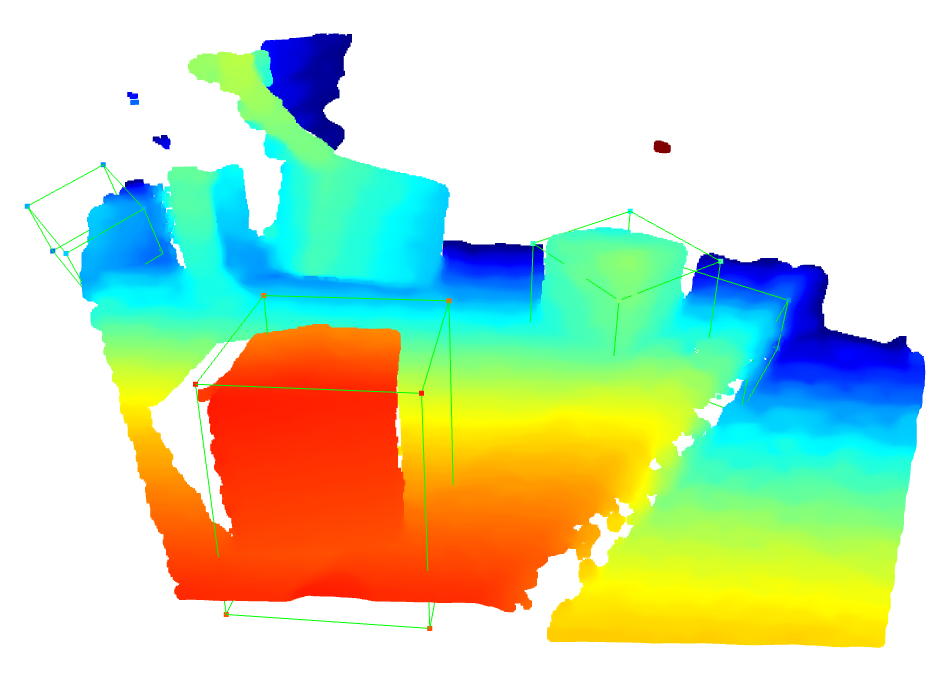
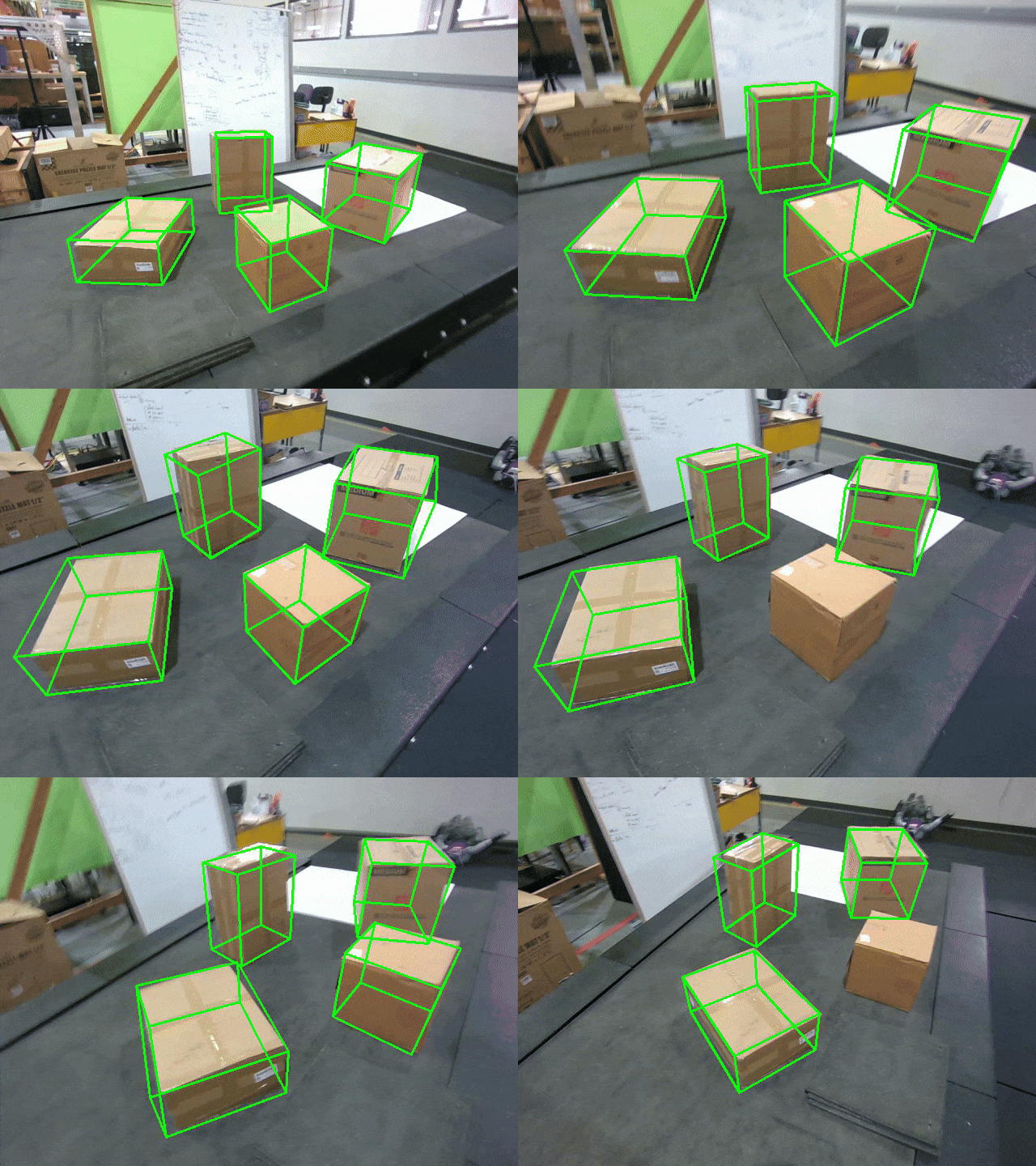
Working with Venkat Ramnan K and Dr. Chanho Kim, I contributed to a project developing a 9-Degrees-of-Freedom 3D object detector capable of predicting full box orientation—including pitch, roll, and yaw—from partial point clouds derived from RGB-D images. The model extends TR3D to support full 3-DoF rotation using a 12-D pose representation and a Chamfer-distance–based regression loss. I implemented the data loading pipeline, added data augmentation modules, and collected real-world test sequences to evaluate sim-to-real transfer. This work introduces a new synthetic 9-DoF box dataset built in NVIDIA Isaac Sim and demonstrates strong performance in both simulation and real settings.
Quantifying Gerrymandering

Grinnell College 2024-2025

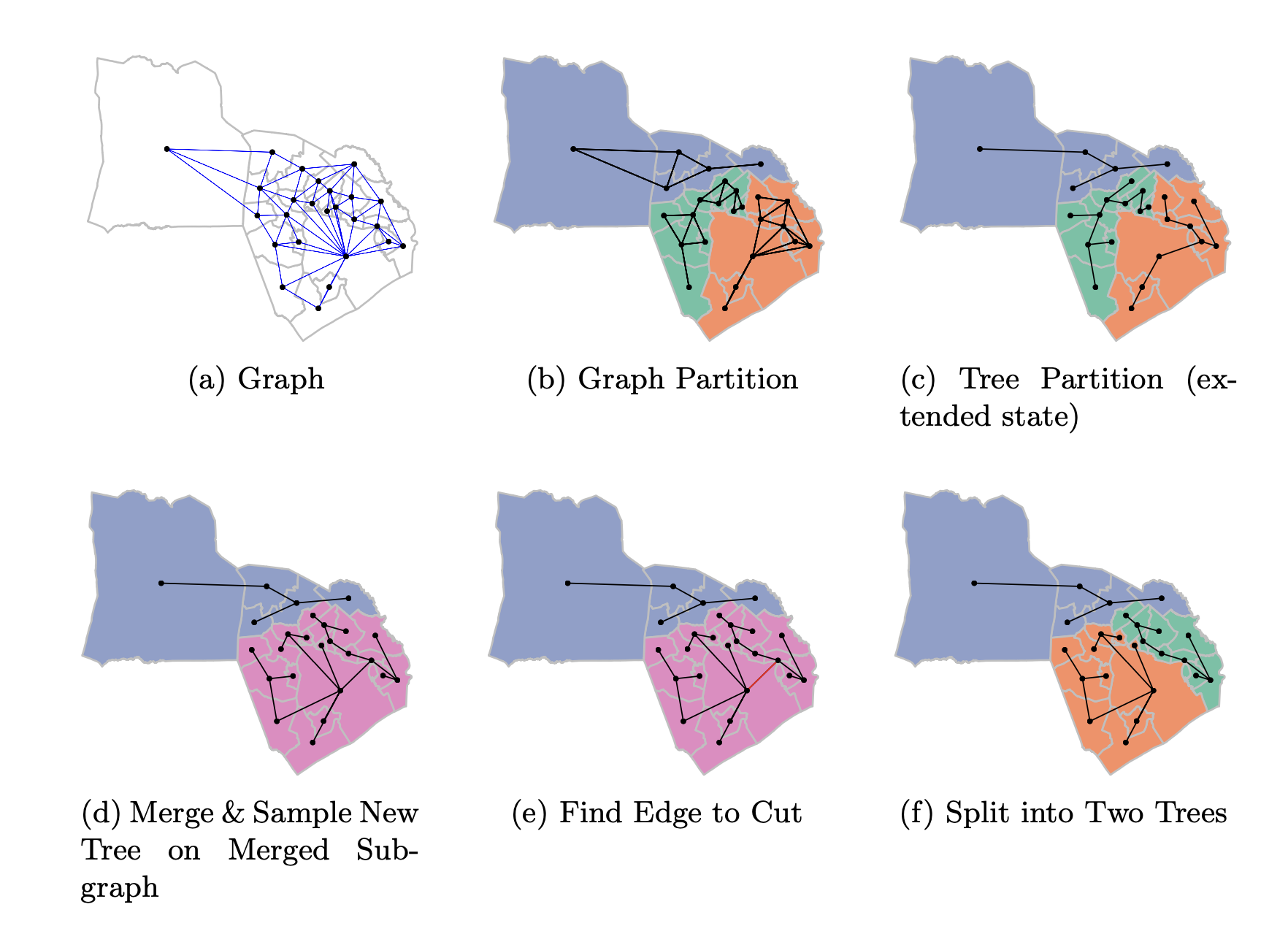
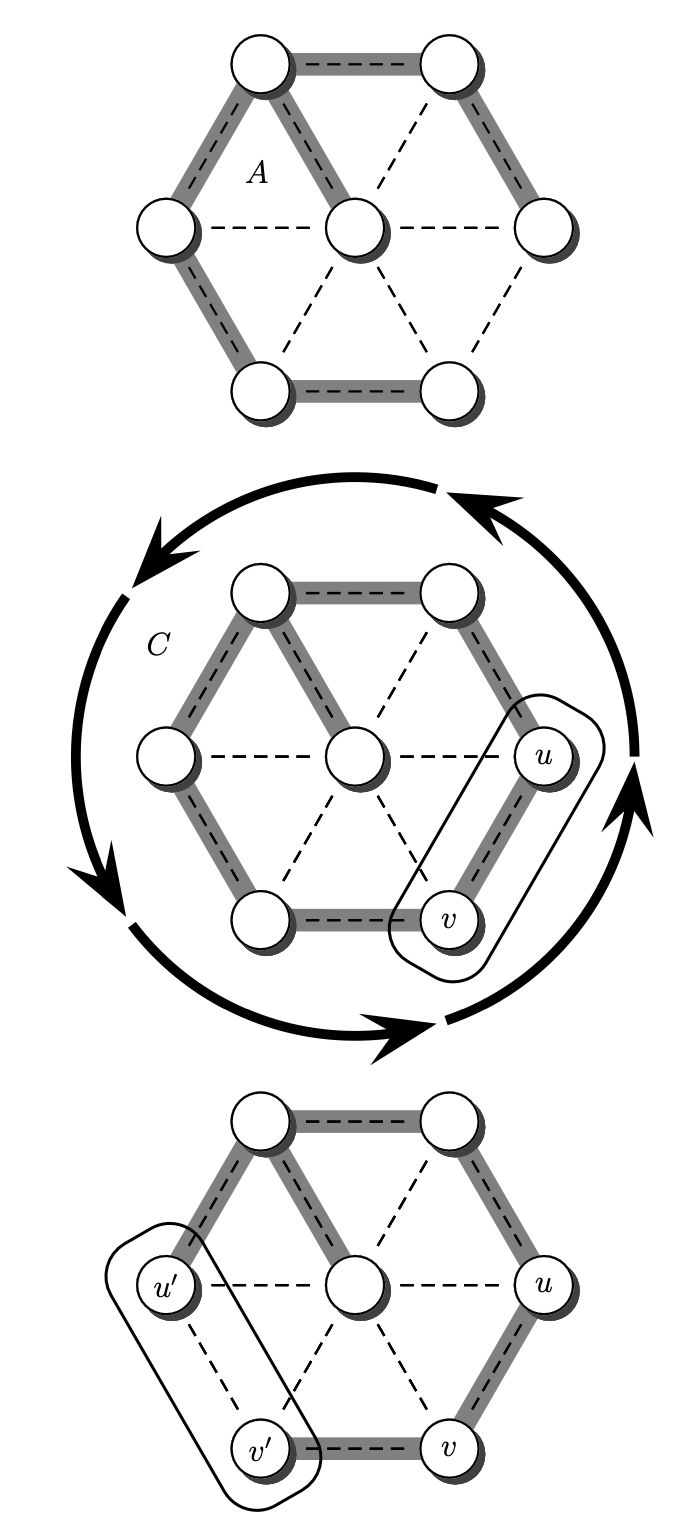
In this project, I worked collaboratively with Chong Zhao under the guidance of Professor Eric Autry, whose research applies the Metropolis-Hastings algorithm to detect gerrymandering. My task involves analyzing the behavior of two algorithms for sampling random spanning trees from a known distribution, in order to identify whether we could replace the other as a subroutine in the forest recombination process (figure 1) of the Metropolis-Hastings algorithm.

The first algorithm is Wilson's algorithm, a method based on loop-erased random walk. This algorithm suffers significantly when edge weights are introduced. The second algorithm is Russo's algorithm, which samples spanning trees iteratively. We expect Russo's algorithm to outperform Wilson's algorithm with weighted graphs.

I presented this research at the Joint Mathematics Meetings in January 2025.

Benchmarking Approximate-Nearest-Neighbor-Search Algorithms

Oak Ridge National Laboratory 2023

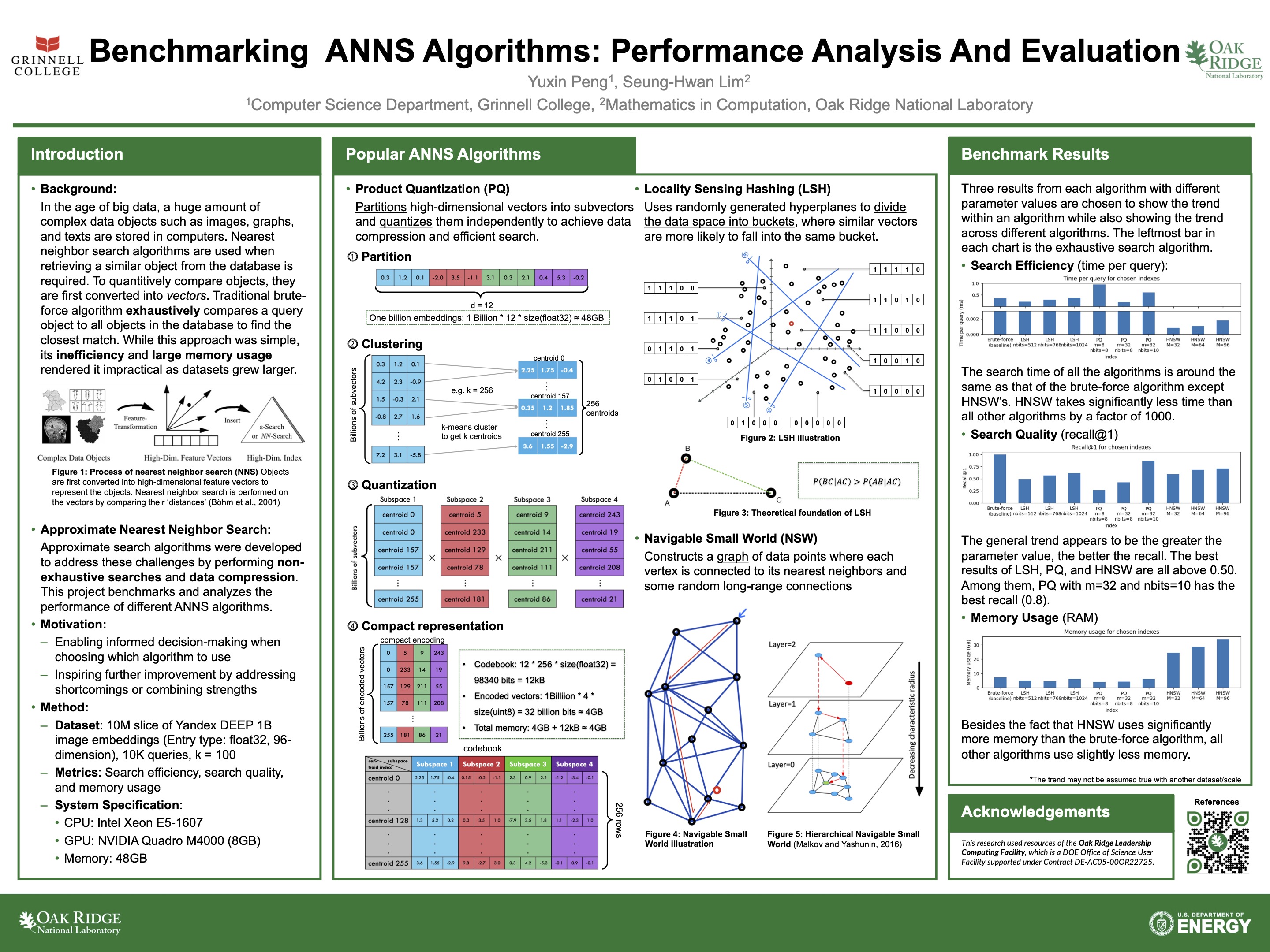
In this project, I worked independently under the guidance of Doctor Seung-Hwan Lim, a research scientist at ORNL. I studied and benchmarked the performance of several ANNS algorithms, including Product Quantization, Locality-Sensitive Hashing, and Hierarchical Navigable Small World Graph, evaluating and interpreting their performance in terms of recall, efficiency, and time complexity.